
Quick note: Though you may have read about this property before, most articles have simply reprinted the same stock real estate photos over and over. As always, all pictures are my own work, and I don’t think you’ll find a tour like this anywhere else.
When you first see it in the distance, you wouldn’t think it anything other than a picturesque home in the Adirondacks:
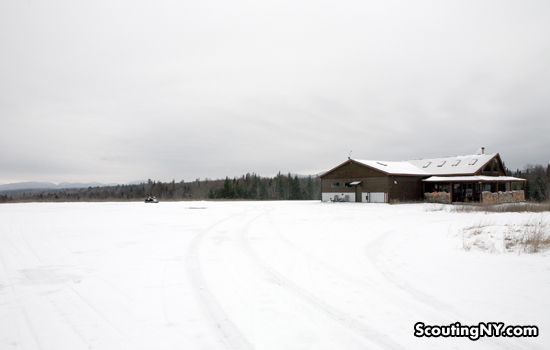
But this house has a secret.
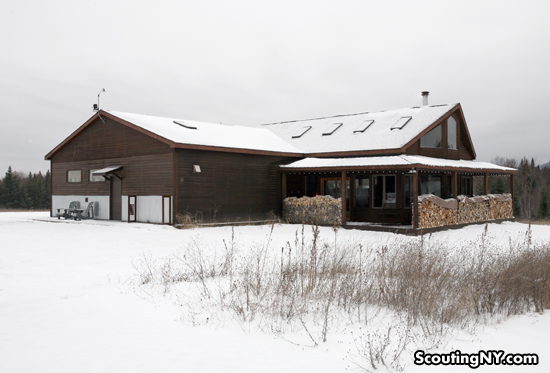
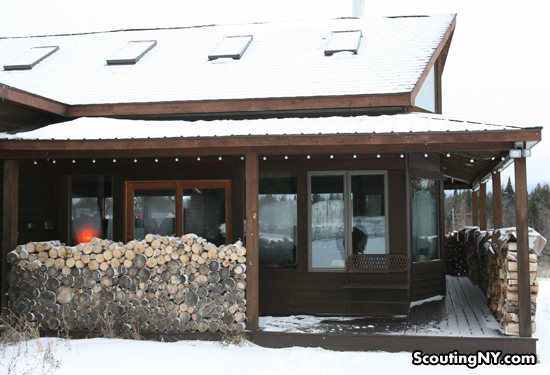
As you head for the door, chopped wood piled high around the porch almost invites you in to warm up over a roaring fire.
Inside, the spacious living room is indeed a cozy place to escape the winter’s cold…
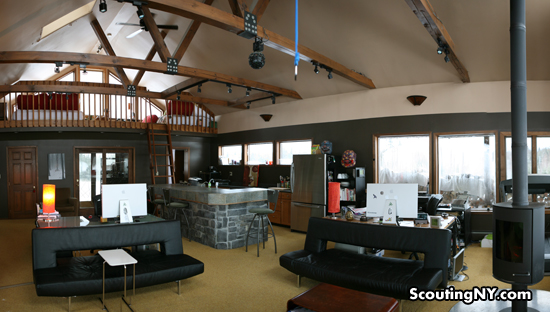
…with enormous windows offering breathtaking views of the surrounding Saranac Valley:


Just about the last thing you’d notice is this door:
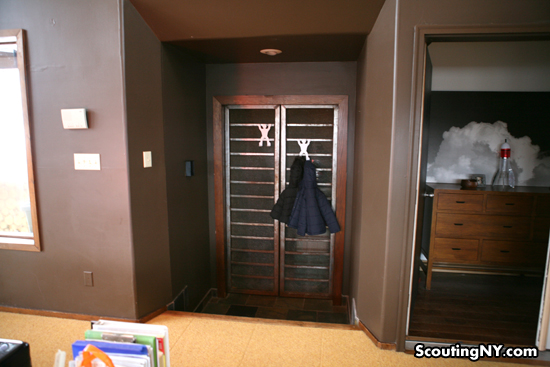
After all, it seems like nothing other than a closet, or maybe a door to the basement. But if you were to try the door, you’d find it locked.

It’s about then you might notice the keypad on the wall beside the door, and perhaps become curious about what was on the other side. If you were to enter the correct keycode, the door would swing open…
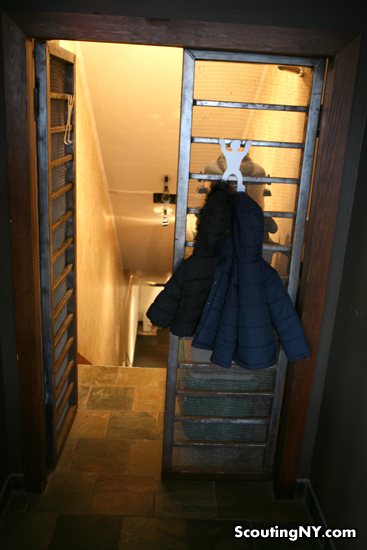
…revealing a long staircase surrounded by cement walls…
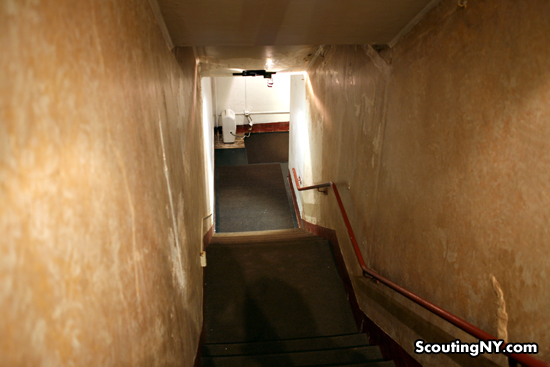
…leading to a 2,000 pound steel blast door:

Why would you need a 2,000 pound steel blast door in the middle of the Adirondacks?
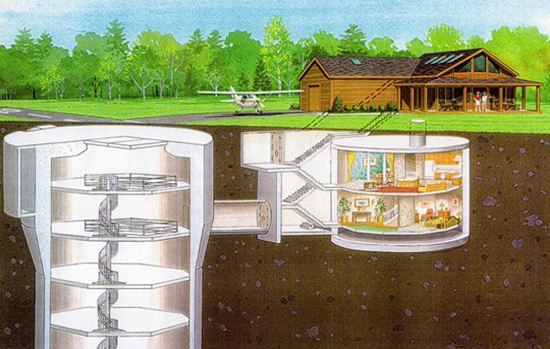
Because this particular house was built on the site of a 9-story Cold War-era Atlas F underground missile launch site – and it’s still there:
Backstory: I was in upstate New York over Christmas break when I read an article in the local paper about a man who had purchased a decommissioned 1960’s missile launch site in 1995, built a few houses and an airstrip on the property, and was now looking to sell it ($750k and it’s yours! click here!), or perhaps lease it for film production use.
I. HAD. TO. SEE. THIS. PLACE.
I immediately contacted the owners, who graciously provided me with a tour which I am thrilled to present below.


There are not one but two blast doors at the entrance to the facility:
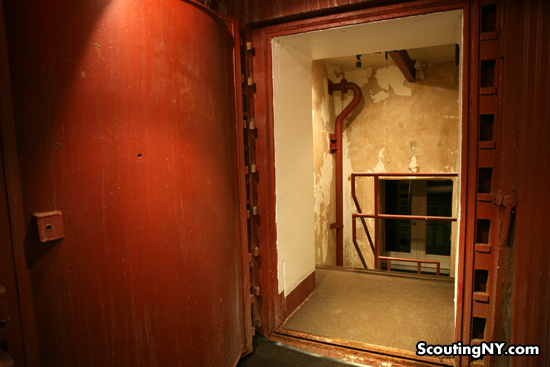
Here, you find yourself at the top of a cement staircase, which takes you to both the missile launch control room and the 9-story silo:

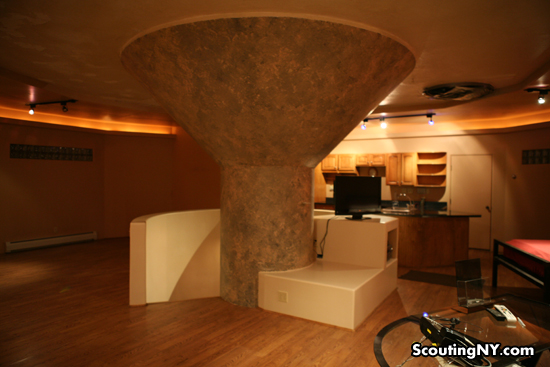
Our first stop was the former launch control room, which has been renovated by the owners into a multi-story living space.
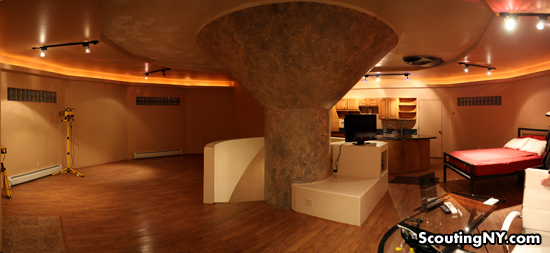
Back in the 1960’s, this would have been filled with computers used to launch and guide an intercontinental ballistic missile armed with a nuclear warhead in the event of, well, Armageddon ala Dr. Strangelove. Hundreds of such launch sites were built throughout the United States, including 12 Atlas F facilities in the Plattsburgh area.
To get a sense of where we are in the facility, here’s a schematic of the launch control center (we entered down that long staircase, passed through the blast doors, and continued into launch control):

See the tube marked Escape Hatch? The original escape hatch is still there to this day, and actually was one of the easiest ways of loading building materials in and out of the complex during renovations:


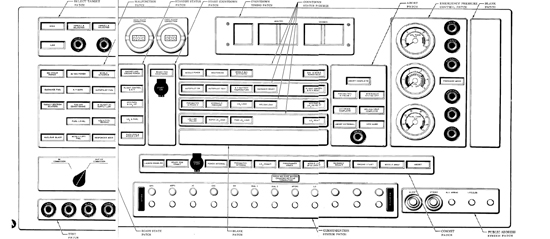
But of course, the real question is: what did the missile launch computer look like? Here it is, courtesy of the insanely informative SiloWorld.net site.

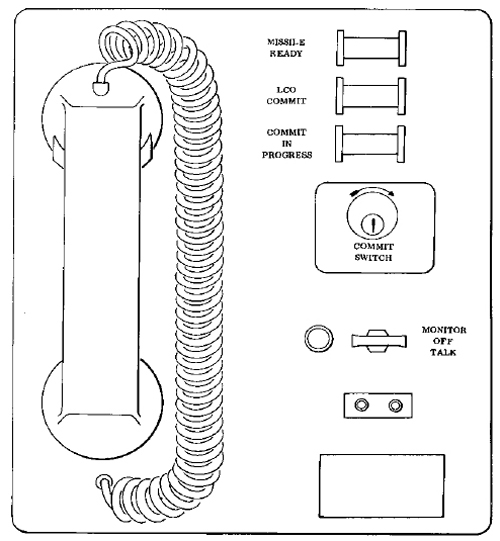
That’s an actual Atlas-F Launch Control Center pictured above. While skimming through the 537 page Atlas base instruction manual (of course there was a manual! Click here to read it – 29mb PDF), I came across a schematic of the computer layout complete with labels. I’m not exactly sure which one is the launch button – click below for a much larger picture:
I’m curious if this phone was also involved – it looks like you’d insert a key to “Commit.”
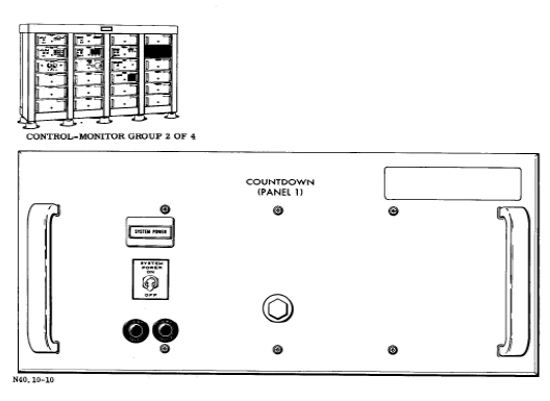
Meanwhile, this is the countdown monitor panel, located on one of the banks of computers in the background of the picture above:
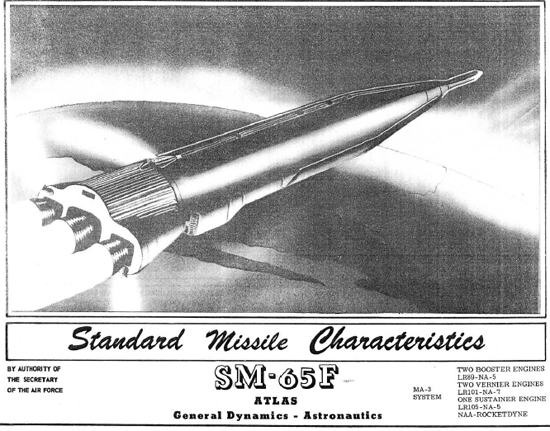
A facility like this cost around $18,000,000 in 1958, nearly $400,000,000 in today’s dollars. And yet by the mid-1960’s, all of the Atlas facilities were decommissioned, rendered obsolete by the next generation Titan II rocket (and later, the Nuclear Arms treaty). In fact, this particular silo, which opened in 1962 and closed in 1965, was never even equipped with a missile.
Sadly, the military ripped out anything of proprietary value from the launch control and silo, including the computers. A lot of cool ornamentation remains though, like these original lighting fixtures:

I’m not sure why, but circular rooms centered around enormous cement columns have such a definitive retro-by-way-of-1950’s-futurism feel:

A winding staircase was installed by the new owners…
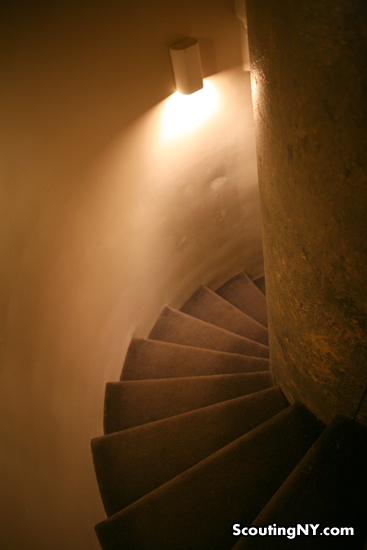
…taking you to an additional room below…

…complete with a marble bathroom!

But now for the good stuff: the silo. We continued down the main staircase to the bottom floor:

From there, we passed through another enormous steel door…
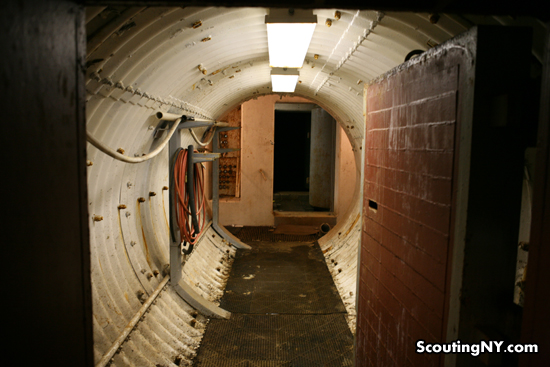
…into a tube-shaped hallway…

Reverse on the door: these doors would all be latched shut in the event of a launch:

We continued through yet another huge door…
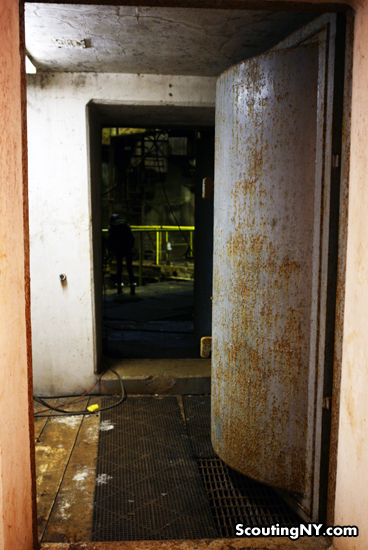
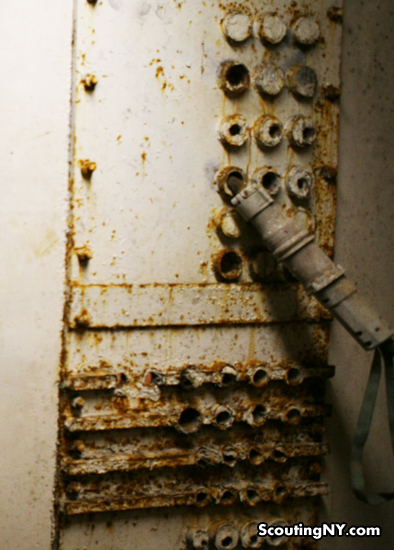
Beside it, cables connecting the launch control room to the silo would have passed through these openings:
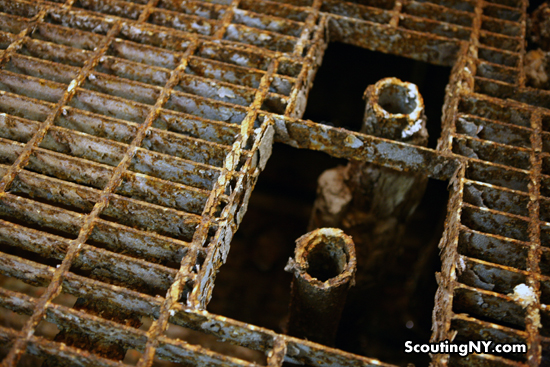
The mesh floor, now rusted with age:
One final steel door…
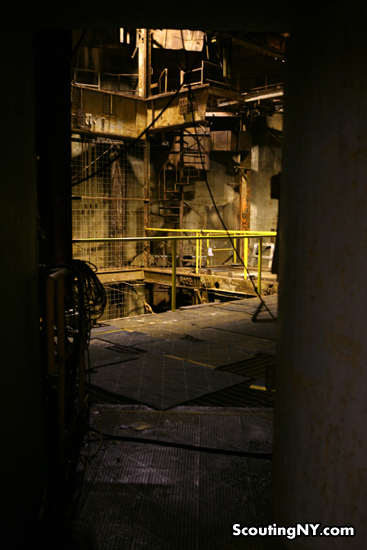
And then we were in the missile silo:
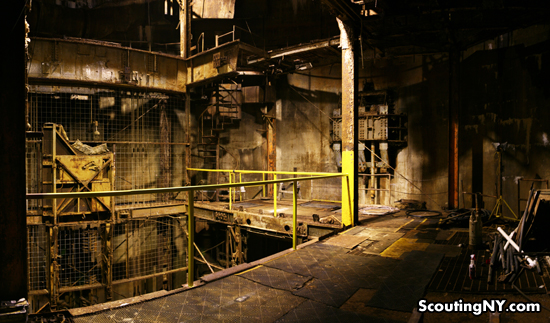
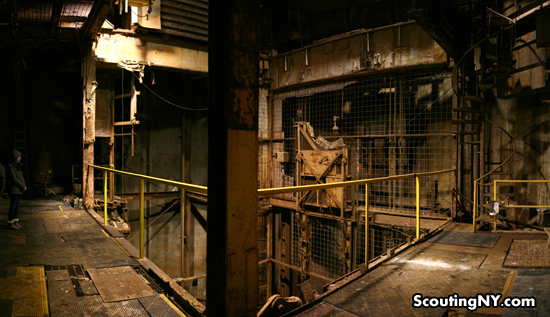
The missile would have originally sat in the space beyond the railing…
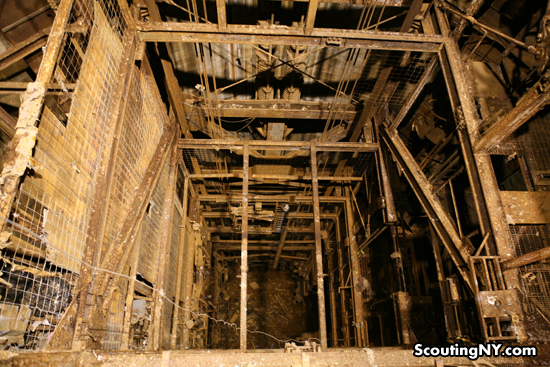
…and man is that a drop!
The silo would have of course looked completely different during its operating days:
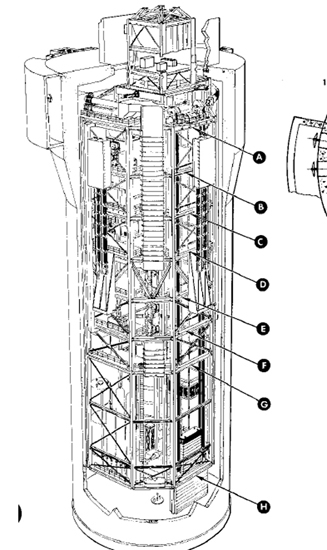
Something like this today…

…would have looked like this in the 1960’s:
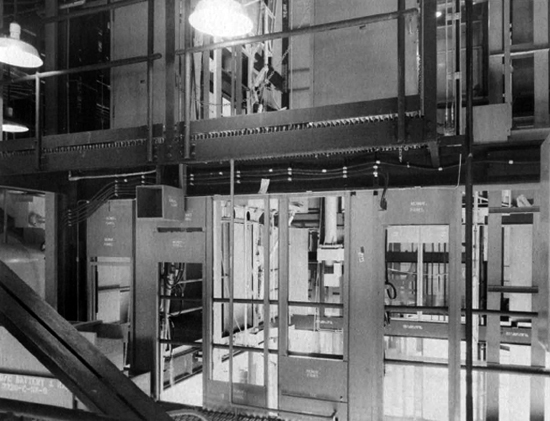
So what happened to the facility after it was decommissioned? Incredibly, the entire complex was flooded with water. This was actually standard government policy for decommissioned silos, as it was a surefire way to prevent trespassing. Also, according to one person I spoke with, the area around this particular silo was quite a bit more rough and tumble during the 1960’s due to a local mining operation, and there was concern that bodies might end up ditched in the silo.
This is one of many pipes that brought in water from the nearby Saranac river:
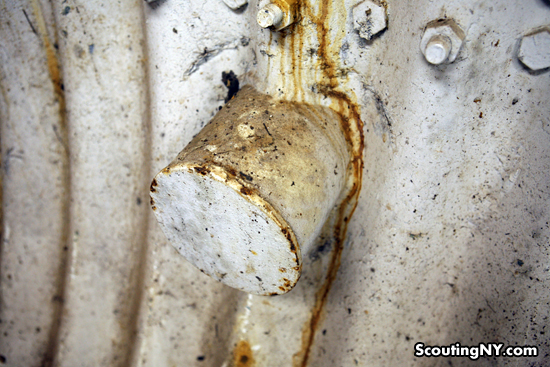
It took months and months to pump out the water, and it was actually in pretty good condition when it first came out. In fact, a bunch of silos remain flooded to this day, and you can actually scuba dive in some!
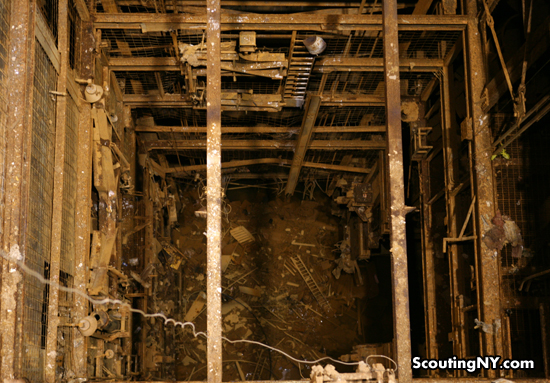
The missile was held in a “crib,” which would have raised it up for launch through a pair of doors at ground level. Those doors have since been sealed…

However, if you go above the silo…

…there’s still a vent over where the missile would have risen up:
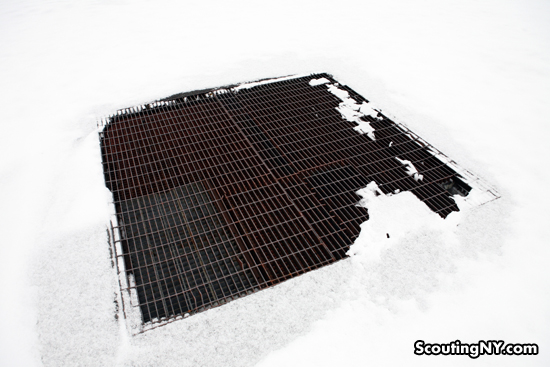
One very cool artifact remains from this process…
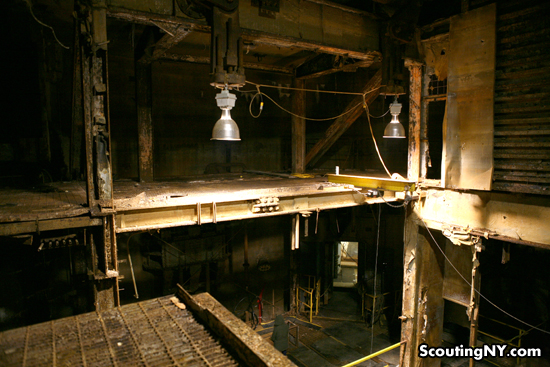
The enormous hardware which would have opened the silo doors:
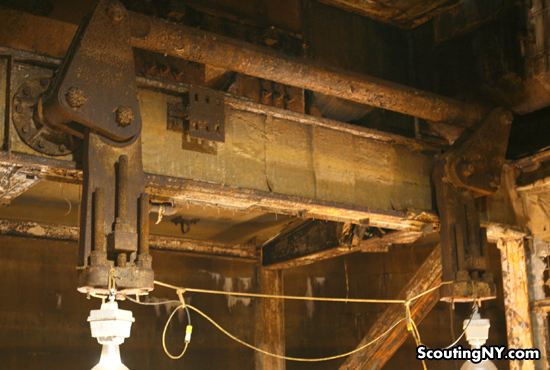
Below, a schematic showing how it functioned:

Another cool relic from the silo’s operating days…
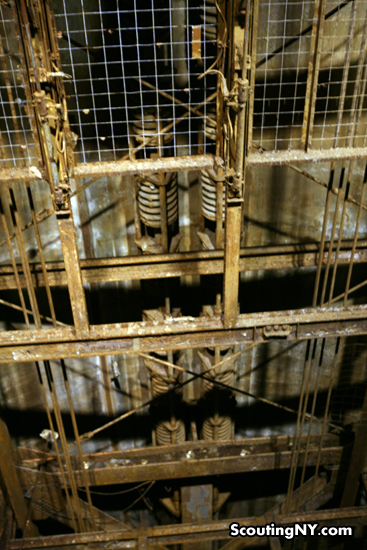
The entire missile crib apparatus was attached to enormous shocks, which were intended to absorb the kick-back of a rocket taking off:
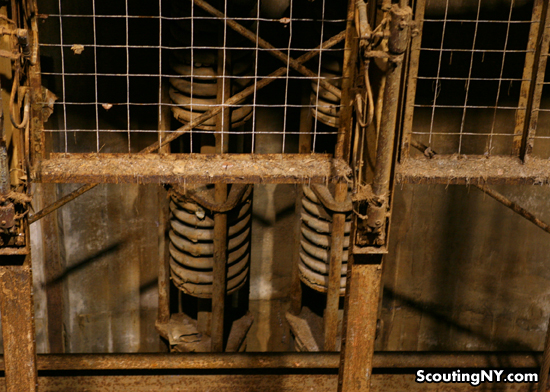
The springs pictured above attach to enormous crib supports mounted on the walls:

Today, it’s a bit difficult to get from level to level. A spiral staircase still runs up all nine levels…
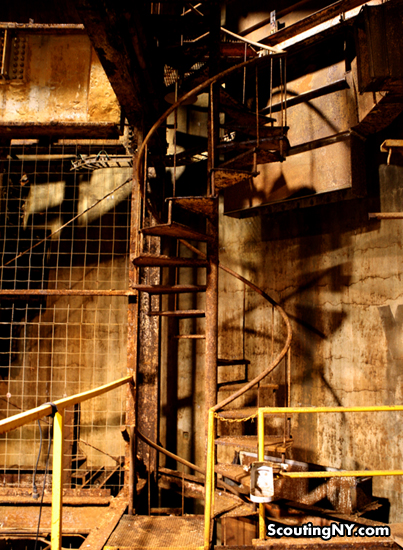
However, the elevator is long gone:

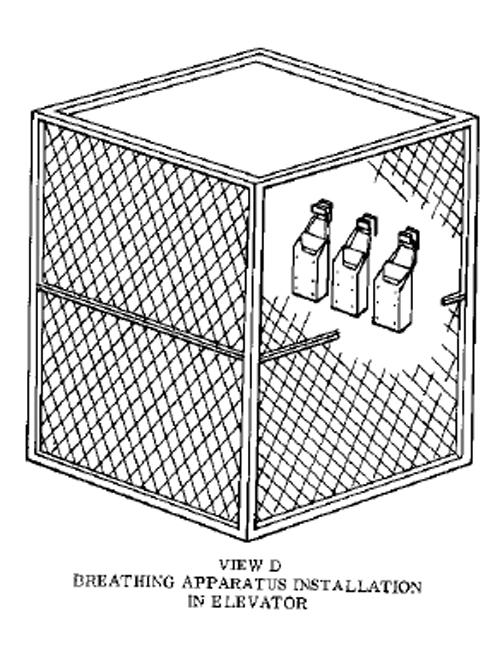
Below, what the silo elevator would have looked like, with emergency breathing masks:
It’s almost unbelievable to think that in just 50 years, this…

…and this…
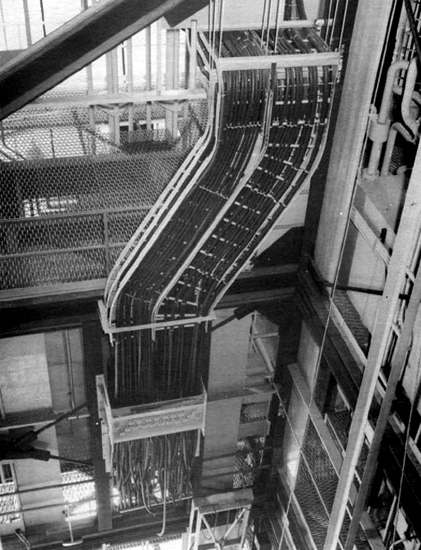
…became this:

Maybe that’s a good thing, in a way.
Being located north of Albany, it’d be quite a commute for your average film crew to go that far from New York City for a film shoot. But for the right movie or TV show looking to spend days or weeks on location, this could be a dream location (ahemJamesBondahem). Not only do you get a beautiful mountain home and defunct missile silo…
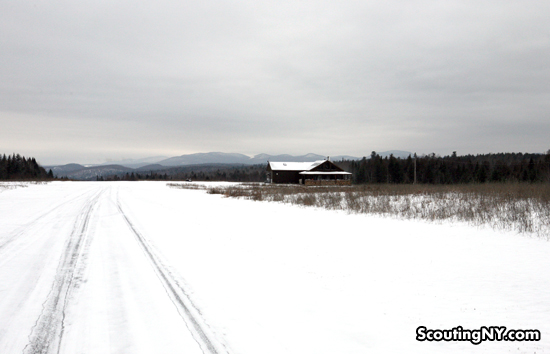
There’s also an FAA approved 2,050-foot runway…

…acres and acres of woodland…

Gorgeous views…

And even a log cabin!
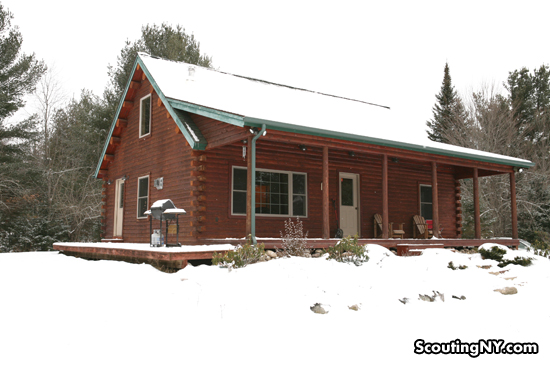
Just be sure to set up the Locations Department in this room:

Touring this place was really incredible, and I can’t thank the owners enough for allowing me access. For additional information and to get in contact, simply go to www.silohome.com.
I’ve been to pretty much everything, from abandoned castles to top of the line penthouses, but an Adirondacks vacation house built over a defunct Cold War-era missile silo? That’s something special.
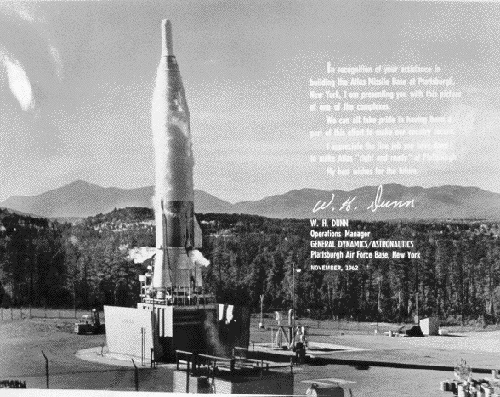
-SCOUT
PS – This is from the beginning of the Atlas F Missile Site Instruction Manual – I love that a cute girl was used among the pictures to get you to STOP! on this page:

PPS – Fore more info, pictures, and videos of missile silos, definitely check out:

Amazing..cool.pics
Fascinating! Truly!
My dad help build silo # 8 back in 1960. In fact he almost died in Nov. 1960. He was running a Cat 977 in the silo at a depth of 80′ when a 3′ rock came loose from the shaft wall hitting his machine crushing his leg and a part hit a labor killing that gentlemen. My father laided on the ground for several hours while they worked getting the elevator that carried the men in and out to work. I found a website (it is on my home computer) that had a typed out report from the start of the construction to the end written by a Air Force Colonel detailing everything about the construction, problems they had at each site and the accidents and what happen the day my dad got hurt and all I can say is if that happen today they would be at the house with there check books open, The report stated that they did not have enough rock bolts , gunit or wire mesh to keep the walls secure from falling rocks. Plus the report stated that the elevator was to be in operations at all times and it was down when the accident happen. My father did not talk much about it but I know he went from a person that water skied, snow skied to a person that had problems with his right leg up to the day he died. He tried suing but retained a crappy lawyer and never got a penny. He ended up going back to work running a huge air compressor since they let him sit in his car until he have to shut it down. But at silo # 8 I want to say two men died in the construction of the one site. But the silos built in upstate New York were much better than the ones constructed in the midwest has far as cost over runs and other issues. You have to remember in the early 60’s before the missiles of October crises they were building these silos all across the country at a very fast pace. The rocket tecknology out paced the construction so once the silos were built the rockets were already obsolete. From what I read the silos in NY were not in uses for a very short period. But there is a site you will have to Google it but I want to say it is maintained by the guys from the Air Force that worked at the silos and someone took the time to do a time line useing the news paper articals from the Plattsburgh Press from the very start when it was announced that they were going to build the silos around a perimeter of the air base 30+ miles out. Also is the report that I mentioned is in PDF form but I learned a ton from it. I was only a year old when my dad got hurt so that is why I have looked high and low to get information about this. All of this is too cool and glad they never had to shot one off.
My father was killed in that silo. Can you email me?
Jim, I am so glad you added to this story and I have to say it made it much more interesting and personal than the original story above. That would be cool if they made a movie on this and got information form survivors or family’s of the people that built these.
My father also worked on the Atlas missile system. He was an electrical engineer with the Air Force stationed out of Omaha and Kansas City. Now that my father has passed away I wish I had asked more questions of his work history. Thank you for posting this information.
With havin so much content do you ever run into any problems of
plagorism or copyright infringement? My site has
a lot of completely unique content I’ve either created myself or outsourced but it seems a lot of it is popping it up all over the web without my permission. Do you know any techniques to help reduce content from being stolen? I’d really appreciate it.
A note: I had the (fear-filled) opportunity to tour an active Titan Silo in the late 60’s, one of 13 located around Tucson Arizona. The illustration showing the launch controls has a “Commit Key”slot on it. There were two of these consoles located in the control room, approximately 15 feet apart. The purpose? to actually launch the missile, the commander and the second in command BOTH had to agree, place the keys kept around their necks in the Commit Key slots, and simultaneously turn them – they were located so far apart so that it would be impossible for one maniac to reach them both – then, the actually “launch” button could be pressed… Bye-bye, see ya later world… An additional note: the shock absorbers (springs) to dampen the missile launch? In the Titan silos, the two floors that were control and crew living quarters were also suspended in all four directions (up, down, side-tos-ide, in all directions) on huge springs, to allow the Earth to shake around the crew and equipment and avoid injury and damage!
I worked on the Atlas and Titan missile guidance and communication equipment from 1960 to 1965. Part of a travelling maintenance civilian crew working out of McClellan AFB in California. Worked at most of the Western US sites including Vandenberg AFB and Francis E Warren AFB in Cheyenne Wyomiing.
Man I was realy disappointed that they didn’t gut the silo before they sealed the door. I would think about buying it if they were just blank floor. At this point I don’t know how you’d ever clean out the silo to make it safe and useable, We love the area and being Air Force and Aviation it would have been perfect. I would have rather had the silo as one big empty shaff. The scrap metal prices would be great , but no way to get machinery back into it to get it out
Hello! I came across your blog while doing genealogy research! My Grandfather was born in Clayburgh and spent the first 20-some years of his life there before heading of to train for WW2. I know for a fact there are many abandoned missile silos in the Adirondacks because I grew up just outside of Plattsburgh. The Air Base was a great source of pride for me growing up. I guess that silo is the one I’ve always heard about being converted into a house. Beautiful! I’ll look for that house the next time I go through town.
The author of this article states that site #8 in Clayburgh, N.Y.
never even contained a missile. I was in the Air Force and assigned
to Site 8 in 1964 and 1965. Site #8 was fully loaded and ready to go with an Atlas F ICBM, as were the other 11 Atlas F launch complexes surrounding Plattsburgh Air Force Base. (10 silos in New York and 2 silos in Vermont).
Makes me sad to see how this once proud silo now looks.
Would anyone know if there are maps or a way to find out the locations of all 10 sites and the sites in Vermont. Where any others for sale, even in disrepair?
Destino,
Here ya go: http://www.sevendaysvt.com/vermont/bombs-away/Content?oid=2135204
I have see the one near Keeseville back in the late 70’s. VERY cool!
Stumbled over this article very interesting. In the early 1960’s my Father helped build a Silo, between Essex and Willsboro NY up on Lake Champlain , the site is still there but don’t know to much about it there is a business on the site at present. My father still lives in area 94 yrs old and has Dementia so not able to ask any questions.
Just found your site after a blog I read posted about another one of your articles. This is a great write up. One interesting note, it looks like, in the year and a half since the article was written, the asking price has gone up to +$3 Million.
Reminiscing (6/24/2013):
In the fall of 1957, I was one of the three-man team (Bob Ruggles, Bill Barton and myself, Andy Burns) at American Machine & Foundry Company’s General Engineering Division in Greenwich, CT who researched available data to generate the “Architect-Engineer’s Handbook for the WS107A2 Launcher Installation”, which established Thermal and Ionizing Radiation and Mechanical Ground Shock criteria for the design of the nation’s — and the world’s — first silo-based ICBM (TITAN) launcher.
In 1958, AMF (yes the bowling alley company) subsequently designed the “hard-based” silo launcher installation configured to survive an attack at the 100 psi range of a 1 to 20 kiloton nuclear weapon. I was responsible for vindicating the environmental design integrity of the top `doors’ and of the pendulous shock strut installation that supported the missile.
In the following year, AMF designed the “hard-based” silo launcher installation for the next generation ATLAS missile. This design was distinguished by the shock mounting of the entire missile and launcher installation as a single mechanical entity on four pairs of 60 foot long pendulous struts, each strut incorporating six bays of coil springs. These struts supported the three million pound package at a vertical natural frequency of 3/4 cps and a horizontal natural frequency of 1/8 cps. I performed the same environmental integrity assurance function for the ATLAS launcher installation design.
I had no part in the actual construction of either silo laucher design.
In the course of these design exercises I conceived, coincidentally with then unknown others, a novel analytical concept, now known as modal participation factors, that revolutionized the approach to analyzing the response of multi-degree of freedom mechanical structures to dynamic disturbances.
I published a development of the concept in Bulletin No 31, of the DOD SVAE (Shock, Vibration and Associated Environments) Symposia (1963). The paper, entitled “A Generalized Response Evaluation Procedure for Multidegree Spring Mass Systems”, actually applies to any physical system whose disposition and exposure can be defined in terms of linear, second order, simultaneous equations.
Subsequent to the silo-launcher design efforts I exploited my new-found expertise (and met those then-unknown others) when I made my pitch to the Navy to produce the “Guide for the Selection and Application of Shock Mounts for Shipboard Equipment” (1961) and, ultimately, its sequel “Design of Deformable Foundations” (1962).
Golly, that was more than half-a-century ago.
In 1975-76 I did twice conduct three-day seminars on “Shock and Vibration Mitigation” for NYU’s School of Continuing Education but then got too busy doing other things to continue with that program.
Andrew Burns, Southbury, CT, 2013.
I would love to own one of those missile silos but nowadays it would cost a fortune probably a cool million to purchase & another million to fix it up.
It would cost more than 10’s of millions to fix it. To many environmental problems to overcome. See the 556 SMS Atlas F Squadron display @ the “War of 1812 Museum” in Plattsburgh, NY. For more information on the only Air Force ICBM Complex east of the Mississippi River. Great land mark. NY State should have purchased one to be set up as a tourist attraction years ago.
Awesome blog post.Really thank you! Want more.
Describe the purpouse and functions of various network devices.
The National Society of Professional Engineers (NAPE) is America’s main engineering association. Calculate the expected ultimate loss ratio for the three-year period.
Again, there is no difficulty in doing this since it’s what one does best. As more plus more organizations have grown to be more considering developing algorithms that may intelligently analyze conversations, mentions and sharing to get additional intimate insights on consumer interest, consumer behavior and general market trends (Solis, 2011). One of the very popular approaches to start a web-based retail store would be to start being a dropshipper.
Concerns about Missile sites buried deep in the Mid East desert bring back Cold War summer memories of buried missiles site in the sand much closer to home. Along with the construction of snazzy beach clubs up and down the narrow strip of land of Long Island where I grew up in the 1960s, the government had built, for our protection, a Nike installation. Kept in cold storage were 60 Nike Ajax guided surface to air missiles deep in concrete bunkers buried in the sand. To read more how the cold war kept a chill in the summer air
http://envisioningtheamericandream.com/2013/08/13/beach-club-paradise-protected-2/
Whats the address, I want to Google Earth it.
Bunch of these around southern Az. One in Green Valley used to have tours and maybe still to…………..Most interesting
As a fairly new Rotarian in Champaign, IL in 1960-63, I think, we had a meeting at the USAF base in Rantoul, IL named Chanute AFB, a base from WWI days. We toured the area where I met a Sr. Master Sargent, who told me had spent ten years learning how to make the Atlas missile work. It had to pump the equivalent content of 2-3 railroad tank cars into the rocket engine in several minutes and had to have the pump be up to full capacity in one third of a second. I asked him if the new solid fueled rockets were going to be easier to maintain and operate? He replied, “Mr. you just ruined my day! It has taken me ten years to learn all of this and now its obsolete!”
I apologized and moved on to the rest of the tour of the base where I tested and won a chance to be a pilot in 1954. Turned out the Korean War wound down and I was obsolete on the way to becoming obsolete too!
Pretty element of content. I just stumbled upon your weblog and in accession capital to claim that I acquire actually loved account your weblog posts.
Any way I will be subscribing for your feeds or even I achievement you get right
of entry to persistently rapidly.
Impressive. There is stuff buried all over the USA. Hundreds of mles of mining tunnels, nuclear bomb shelter under a 5 star resort for Congress, salt mines for storage, Iron Mountain for genealogical info, and a pineapple field in hawaii with an underground factory complete with sleeping and dining facilities, dispensary, etc. In Honolulu you can ride and inclinded railroad to an underground resevoir. At Pearl harbor is a working underground RR.
This is but a fraction of what the reat of the world has stashed away.
Shipyards, hospitals, housing, factories, all underground.
Synthetic identity theft happens when a person’s identity
is partially or entirely fabricated in some way. Due to this vulnerability, there is always the threat of someone impersonating an individual and stealing their identity by obtaining this data.
“We’ll come to the same place in our digital life, hopefully sooner.
Wow! What an amazing house and an amazing piece of history!
I was in the Air Force and stationed at Forbes AFB in Topeka Kansas. I was in the engineering dept. and worked on drawings of the sited in Kansas! You could always tell when you drove by one as it was marked with a very small sign on the roadside with just a “M” on the sign. This was 1961-1962.
Very interesting!! Thank you
When i lived in Mahwah NJ, i was only minutes away from a Silo site that was de-commissioned in the early 90’s—-I remember exploring the area after it was abondoned and discovering one of the silos, unfortunately i did not take any photos of the area or the silo—-the site is now a very upscale development called Rio Vista and it is near the Campgaugh ski area and Darlington golf course.
When i lived in Mahway NJ i was only minutes away from a Silo site that was de-commissioned in the early 90’s—-I remember exploring the area after it was abondoned and discovering one of the silos, unfortunately i did not take any photos of the area or the silo—-the site is now a very upscale development called Rio Vista and it is near the Campgaugh ski area and Darlington golf course.
…would be really cool to put an indoor 4-sided rock climbing wall in the silo cavity
Great post. I was checking constantly this blog and I’m impressed!
Extremely useful info specifically the last part 🙂 I care
for such info a lot. I was seeking this particular information
for a long time. Thank you and good luck.
Visit my blog Bing
Love your work, man.
This was a great article! If you ever want to check out one of these that’s “like new”, head on down south of Tucson and hit the Titan Missile Museum. It’s a completely restored silo, and even has the missile still in it. (One of the Star Trek movies was filmed there.)
If you’re lucky, they might let you turn the launch key!
Keep up the good works.
My dad was a Tech Sergeant in the Airforce during the 1950s, ’60s and ’70s. His specialty was Atlas missile technician and radar repairman at many different silos across the US. I was borne in Limestone, Maine (Loring Airforce Base) towards the of his career before he retired. I will try my hardest to show him these pictures to try and jar his memory of the days he spent 12 hour shifts under ground locked in one of these things.
Living in the Adirondacks also, less than 50 miles from the area in the article. I am less than ten miles from two of these projects. Both are now privately owned converted to homes. My Dad also did work at these sights, mainly road work and paving. It is nice to see how innovated people have used these facilities and preserved their history.
Here’s an aerial view of the site. The URL includes the latitude/longitude coordinates.
https://maps.google.com/maps?q=Standish+Rd,+Saranac,+NY&ll=44.601117,-73.856739&spn=0.003911,0.00809&t=k&z=18&output=classic&dg=brw